

After finishing the ‘Good Vibes, Good Life’ a few weeks ago, I learned that the author, Vex King, had recently released another book about relationships. Titled ‘Things No One Taught Us About Love’, this book promised to focus on building healthy relationships with yourself and others.
Relationships are something I struggle with, both romantically and platonically, so I was looking forward to seeing King’s insight on the subject. I was especially hoping he’d have some wise words on healing from past experiences and learning to trust again after you’ve been hurt.
The book starts with a close look at the nature of love. King makes very clear from the start that you are love, that the love you’re searching for is in you. Your relationships are simply a reflection of the love you carry inside you.
“Love is an internal state of being,” King writes, something that shines from within us. Relationships, however, are an external state of doing. That means translating the love you have within into action that you share with another.
King likens a relationship to a garden that two people choose to nurture together. If both people dedicate time, effort, and attention, their garden thrives while the experience of love between them grows.
“Find someone who will help you return the love within yourself, over and over,” King tells the reader. But in order to be loved for who we are, we must first figure out exactly who that is.
A few sections into Part One, King introduces the concept of the ego, but not in the sense you may know it from Sigmund Freud. He refers to the ego as the part of us that is not permanent, but rather like a mask we paint on top of our core. This term is seen throughout the book as it ties to various topics.
The fundamental message behind the entirety of the book is that love attracts love; when you find love in yourself, love from others will find you.
King suggests several ways to tune into the frequency of love and find it within yourself, from going for a walk and look for hearts in nature, finding one thing you admire about every person you encounter, or create art in any form as an expression of pure love.
Part Two takes a deeper dive into getting to know yourself. Recognizing repeated patterns and thoughts that give you the same unwanted results is a lot more productive than continuing to ask yourself, “why does this keep happening?” Being honest with yourself about these things is the most powerful thing you can do for both yourself and your relationships.
I highlighted a section of text in Part Two that said, “Those who are comfortable being alone can often love deeply and purely, because they are not sharing to receive, but simply giving.”
These words resonated with me because I am someone who seeks out time to be with myself, but I do feel like the way I love is exactly as King described it – deeply and purely.
The need for self-love is highlighted in its own chapter, where King introduces two types of self-love. Big-‘S’ self-love is what happens spontaneously in moments of connection, while small-‘s’ self-love is taking action to prioritize our mind, body, and spirit to return to a feeling of wholeness.
King then cautions against relying on physical attraction in a chapter titled ‘Your “type” isn’t necessarily good for you’. He says when pursuing a new relationship, to ask yourself questions about mutual respect, aligned values, communication, and shared relationship goals. He gives several examples of the types of questions you can ask to help start finding love in all the right places.
He acknowledges that we all have some red-flag behavior because everyone has been hurt, but awareness of them can create opportunities to heal from the things that have hurt us. Don’t build walls around your troublesome tendencies, King says, or else you risk becoming challenging for someone to grow beside.
Attachment styles – secure, anxious, dismissive avoidant, and fearful (disorganized) avoidant – and their impact on all types of relationships are explored in this section. Some attachment styles can struggle with connection, but King reminds the reader to approach relationships from a place of openness to help both you and your partner know and accept you as you are.
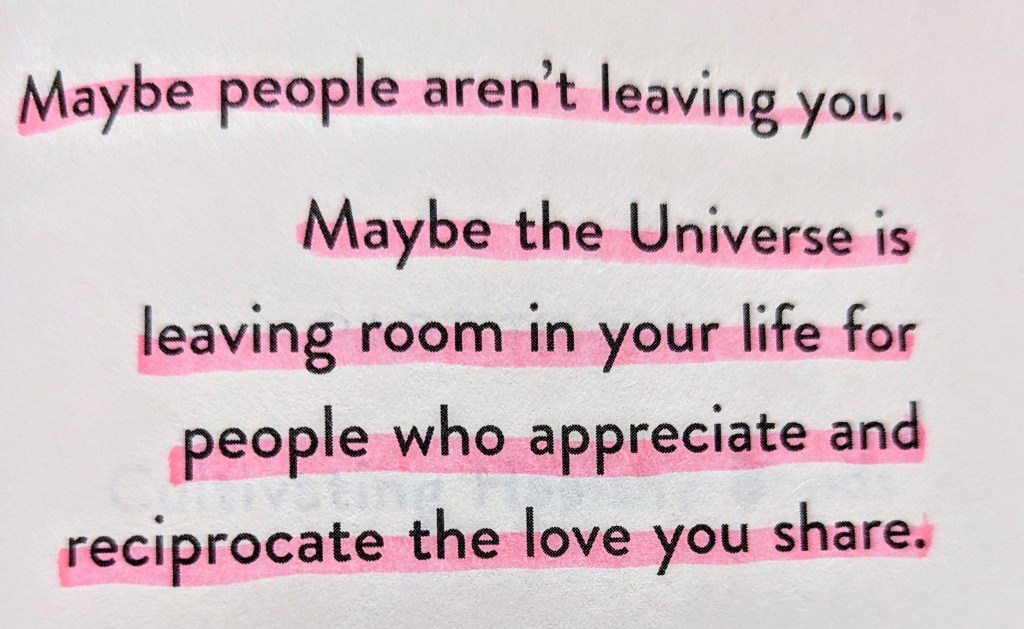
A chapter in Part Three that especially caught my eye was titled ‘Trust starts with you’. I have difficulty allowing myself to trust people because of the way I’ve been treated in the past, but one thing King made very clear in this chapter was to not let fear win. He gives examples of how to lead with trust in a relationship, as well as how to cultivate self-trust.
“Once you’ve developed trust in your own judgement and value, it is possible to build up trust slowly in your next relationship,” King writes.
Healthy boundaries and expectations are explored, as well as things that could be considered unhealthy and damaging to a relationship. Such expectations include expecting your partner to put you above everyone and everything, or ownership of each other’s bodies. Overall, King just wants the reader to know their worth in order to identify who is worthy of their time and energy.
A book on relationships couldn’t avoid the subject of love languages, but King says there are many more than just the five we commonly know. He says love cannot be categorized so simply, despite what the ego-mind wants to minimize to better define and control experiences within our relationships.
He talks about true “relationship goals”, which is nothing like you see in those hashtags on Instagram. He describes the real goal in a relationship is two people who share a vision for the future and support in each other’s dreams so they can both shine. Communication is paramount in a successful relationship, including how to learn to navigate disagreements in a healthy, productive way. He refers to a meaningful and mindful relationship as RICH – an acronym that stands for Respect, Intimacy, Communication, and Honesty.
Don’t expect perfection is a recurring message throughout the book, but King gives plenty of advice around what a true happy couple looks like – prioritizing growth and being a source of inspiration for each other.
‘You will have to forgive often’ King titles one chapter which focuses on letting go of hurt to heal and move forward. He points out that sometimes this means drawing a line and letting go of someone you love.
And that’s exactly what the final section of the book discusses – letting go with grace. I gained more from these ~60 pages than I did from the other 240.
King explained “non-attachment” in a relationship as a way to be freely yourselves and fully enjoying each other as you are, not for who the other wants you to be. He gives a long list of ways non-attachment leads to a healthy, loving relationship as well as pointers on how to love without attachment, including staying present and curious, rejecting co-dependence, and removing guilt and shame.
I think the reason this part of the book resonated with me so much is I’ve always struggled with the decision to let someone go. King offers a great list of questions you can ask yourself to help make a more informed choice if you find yourself in that position. After all, being with the wrong person makes you feel less like yourself so learning to let go won’t hurt as much as holding onto an illusion. King acknowledges that healing isn’t linear, but urges the reader to treat themselves tenderly when healing a broken heart. But “soon you will see that goodbyes serve a purpose in helping you grow, and invite authentic hellos.”
Despite how much focus King puts on healthy relationships with others throughout most of the book, he ends it on what was truly his message all along: love starts with you.
The last few sections talk about cultivating love on your own through finding ways to show love to yourself and the people around you.
“It is quiet, and it is deep, and it is humble,” King says of love.
His final words remind the reader to be love and to express it, and your whole world will transform and your presence will enrich every life you touch.
To be honest, I don’t think I gained as much from reading this book as I had hoped to. While King covered many excellent topics, a lot of it felt repetitive and in some ways obvious to me. But for someone who is unsure about the relationships in their life and is looking for a deeper understanding of the nature of healthy connections, I think ‘Things No One Taught Us About Love’ is a worthwhile read.
This title and Vex King’s other works are available on Amazon.





 Better Kate Than Never
Leave a comment